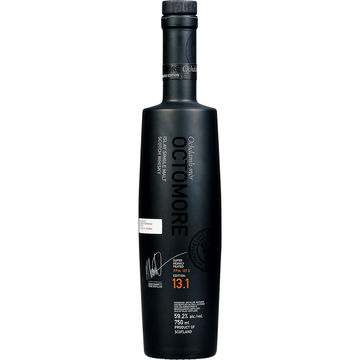
Bruichladdich Octomore Edition 13.1
750ml Bottle


Bruichladdich Octomore Edition 13.1 is a powerhouse in single malt whiskeys, produced at the Bruichladdich Distillery on the Isle of Islay, Scotland. This whisky is distilled from 100% Scottish mainland barley and boasts an exceptionally high peat level, ensuring a bold and smoky character. The making process involves meticulous attention to detail, with the barley being malted to achieve the desired peat level before being distilled in traditional copper pot stills. The whisky is then matured in top quality American oak casks, which contribute to its depth and complexity. Octomore 13.1 is aged for five years, allowing it to develop its intense and robust flavor profile. With an alcohol by volume (ABV) of 59.2%, this whisky stands out for its intensity and unique character.
When it comes to food pairings, Octomore 13.1 pairs wonderfully with rich and savory dishes such as smoked meats, aged cheeses, and dark chocolate, enhancing the overall tasting experience. This edition has garnered numerous accolades and medals in various whisky competitions, solidifying its reputation as a top tier single malt whisky. Whether you are an experienced whisky enthusiast or exploring new flavors, Bruichladdich Octomore Edition 13.1 offers a distinctive experience that is both memorable and unique.
Aroma: The aroma features sweet, nutty smoke, barley sugar, and ripe fruit, including apricots and pears. Malty vanilla, honey, and tablet notes are present, along with coconut and charred oak from the American oak. The peat smoke is both delicate and robust, adding earthy scents.
Palate: A viscous texture delivers densely smoked grain flavors resembling smoked granola with honeyed fruit. The palate reveals layers of smoked apricot jam, barley flour, peat embers, burnt heather, gooseberry, and Turkish delight. The finish includes oak chips, sugared almonds, chocolate lime, and spicy aniseed.
Finish: As the sweetness fades, earthy, mossy notes linger, wrapped in dry peat smoke. Salty citrus and floral notes of geranium and rose emerge, concluding this remarkable expression of the Octomore paradox.